
Real-time signal processing is at the heart of modern high-performance systems across aerospace, defense, telecommunications, automotive, and industrial automation.
As the volume of data and the demand for low-latency processing increase, traditional microprocessors and DSPs often struggle to meet stringent timing and throughput requirements.
Field Programmable Gate Arrays have emerged as a powerful solution, offering unparalleled flexibility, parallelism, and deterministic performance for real-time signal processing applications.
This blog explores FPGA-based solutions, their architecture advantages, design methodologies, industry applications, and practical considerations for deploying high-performance real-time signal processing systems.
Why FPGAs Are Ideal for Real-Time Signal Processing
They are reconfigurable integrated circuits that allow designers to implement custom digital logic tailored to application-specific needs. Several characteristics make them particularly suitable for real-time signal processing:
Massive Parallelism: Unlike CPUs that process data sequentially, FPGAs can execute hundreds or thousands of operations in parallel, reducing processing latency.
Deterministic Performance: Its execution is hardware-defined, ensuring predictable processing times critical for applications like radar and control systems.
Low Latency: Hardware-level processing eliminates operating system overhead, delivering microsecond-level or even nanosecond-level latency.
Flexible Interfaces: They support high-speed interfaces like PCIe, JESD204, and Ethernet, enabling integration with sensors, ADCs/DACs, and communication systems.
Scalability: Designs can scale across multiple FPGAs to handle ultra-high bandwidth or multi-channel signal processing tasks.
In industries such as aerospace, defense, and telecommunications, these advantages make them the default choice for applications that require fast, deterministic, and high-throughput processing.
FPGA Architecture for Real-Time Signal Processing
It is uniquely suited for signal processing tasks:
Logic Cells and LUTs: FPGAs contain programmable logic elements that implement combinational and sequential functions. Designers map filters, transforms, and arithmetic operations directly to these logic blocks.
DSP Slices: Modern FPGAs include dedicated DSP blocks optimized for multiply-accumulate (MAC) operations, which are essential for FIR/IIR filtering, FFTs, and convolution operations.
Block RAM and UltraRAM: On-chip memory enables fast storage of input samples, intermediate computations, and lookup tables.
High-Speed I/O: Transceivers support multi-gigabit per second data transfers, making FPGAs suitable for high-bandwidth sensor or communication systems.
Clock Management: Multiple phase-locked loops (PLLs) allow for precise timing control across multiple domains, enabling complex multi-rate processing.
This combination of flexible logic, specialized DSP blocks, and memory allows engineers to implement custom real-time signal processing pipelines tailored to application requirements.
Common Real-Time Signal Processing Tasks on FPGAs
They excel in a wide range of real-time signal processing operations:
Digital Filtering: Implementing FIR, IIR, and adaptive filters for noise suppression, signal conditioning, or feature extraction.
Fourier Transform: FFT/IFFT operations for spectral analysis in radar, communications, and audio processing.
Modulation and Demodulation: High-speed modulation schemes such as QAM, OFDM, or FSK for communication systems.
Beamforming: Real-time spatial signal processing for radar, sonar, and wireless communication.
Compression and Encoding: Video/audio compression or error correction coding in high-speed streaming applications.
Sensor Data Fusion: Combining multiple sensor inputs, applying transforms, and extracting real-time insights.
By leveraging FPGA parallelism, these operations can be performed on multiple channels simultaneously with minimal latency.
FPGA Design Methodology for Real-Time Signal Processing
Efficient FPGA-based signal processing solutions require a systematic design methodology:
Algorithm Profiling: Evaluate algorithms on CPU or GPU prototypes to understand computational requirements and latency constraints.
Fixed-Point Conversion: Convert floating-point algorithms to fixed-point for FPGA implementation, optimizing resource usage while maintaining accuracy.
Pipeline and Parallelization: Break down computations into stages and execute them in parallel using pipeline architecture.
Hardware Mapping: Map algorithms to FPGA resources such as DSP slices, LUTs, and BRAM efficiently.
Simulation and Verification: Use simulation tools like ModelSim, Vivado Simulator, or QuestaSim to validate functionality and timing.
Hardware Testing: Implement HIL testing with live data to verify deterministic performance under operational conditions.
Optimization: Refine pipeline depth, resource usage, and clock domains for maximum throughput and minimum latency.
This methodology ensures that FPGA designs meet real-time requirements while maintaining high reliability and scalability.
Industry Use Cases
Aerospace and Defense
- Radar Signal Processing: FPGAs perform real-time filtering, FFT, and target detection in airborne and ground-based radar systems.
- Electronic Warfare: FPGAs enable real-time signal jamming, interception, and analysis at high bandwidths.
- Flight Control Systems: Deterministic FPGA processing ensures safe and responsive control loops in UAVs and manned aircraft.
Automotive
- Advanced Driver Assistance Systems (ADAS): FPGAs process LiDAR, radar, and camera inputs for collision avoidance, lane keeping, and object detection.
- Sensor Fusion: Combining multi-sensor inputs in real time to generate actionable vehicle intelligence with minimal latency.
Telecommunications
- 5G Baseband Processing: FPGAs handle massive MIMO, channel coding, and modulation/demodulation in real-time.
- Signal Routing and Switching: Low-latency FPGA processing ensures high-speed packet switching and protocol handling in optical and wireless networks.
Industrial Automation
- High-Speed Control Systems: FPGAs manage real-time control loops for robotics, manufacturing, and energy systems.
- Predictive Maintenance: Real-time processing of vibration, temperature, and acoustic signals enables predictive analytics and automated interventions.
Medical Imaging
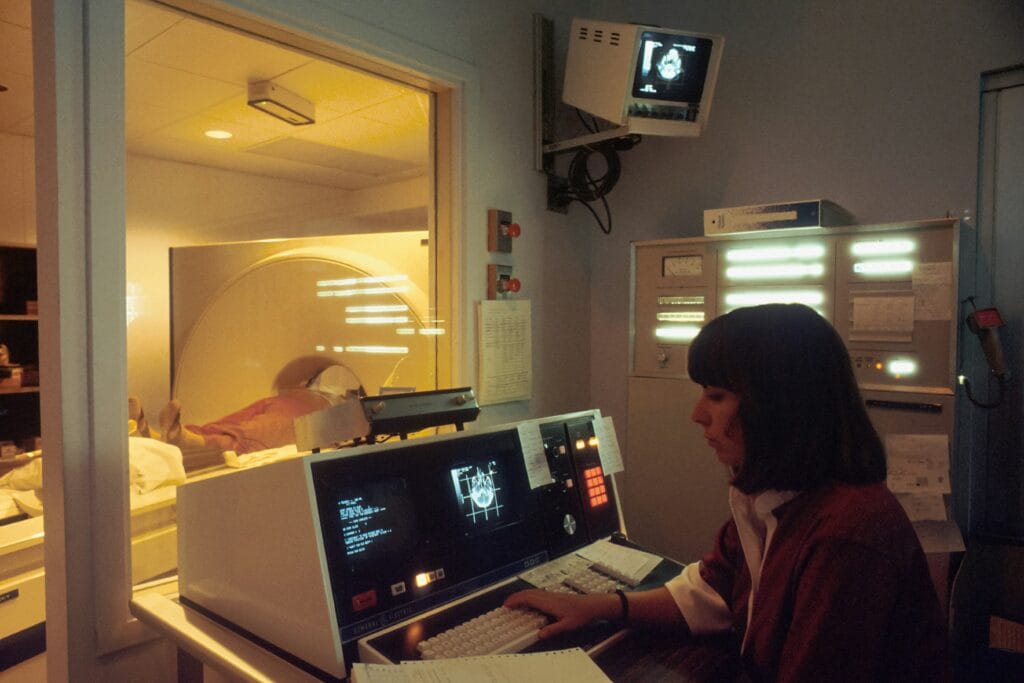
- Ultrasound and MRI: FPGAs perform beamforming, reconstruction, and filtering in real-time to deliver high-resolution imaging with minimal delay.
- ECG/EEG Signal Processing: Continuous monitoring and filtering of biosignals for diagnostics and patient monitoring.
Challenges and Considerations
Despite their advantages, FPGA-based signal processing comes with unique challenges:
Development Complexity: FPGA design requires HDL expertise and understanding of hardware architecture.
Resource Constraints: Efficient utilization of DSP slices, BRAM, and LUTs is critical.
Timing Closure: High-speed, multi-channel designs require careful clock domain management.
Toolchain Complexity: Simulation, synthesis, and debugging tools must be managed efficiently.
Algorithm Adaptation: Floating-point algorithms often need fixed-point conversion for efficient FPGA implementation.
Experienced engineers mitigate these challenges through careful design planning, modular architectures, and advanced verification workflows.

Future Trends
AI-Accelerated Signal Processing: Integration of AI/ML pipelines on FPGAs for adaptive real-time signal analysis.
Cloud-Based FPGA Processing: Remote FPGA acceleration for high-throughput real-time applications.
Heterogeneous Systems: FPGA co-processing with CPUs, GPUs, and AI accelerators for complex workflows.
5G and Beyond: High-speed, low-latency processing for next-generation wireless standards.
Low-Power FPGAs: Optimized for battery-powered or embedded real-time applications.

Conclusion
FPGAs have become indispensable for real-time signal processing in industries where low latency, high throughput, and deterministic performance are critical.
By leveraging parallelism, deterministic execution, and high-speed I/O, FPGAs enable solutions that traditional DSPs and CPUs cannot achieve efficiently.
From aerospace radar to autonomous vehicles, 5G baseband processing, and medical imaging, FPGA-based solutions are driving the next generation of high-performance, real-time systems.
Engineers designing real-time signal processing pipelines must combine algorithmic expertise, hardware knowledge, and verification practices to fully exploit FPGA capabilities.
With proper design methodology, toolchain utilization, and industry-specific optimizations, FPGAs continue to deliver unmatched performance in real-time, mission-critical applications.