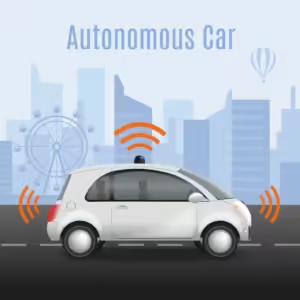
The automotive industry is entering a new era where electronic systems are becoming the backbone of intelligent, efficient, and safe transportation. While autonomous driving is often portrayed as the pinnacle of automotive innovation, a significant technological shift is occurring beneath the surface driven by reconfigurable computing.
Field-Programmable Gate Arrays are enabling automakers and Tier-1 suppliers to build flexible, high-performance, and future-ready systems without relying fully on fixed hardware.
Today, reconfigurable computing is powering everything from advanced infotainment and vehicle diagnostics to electric powertrain optimization and vehicle-to-everything (V2X) communication.

What Is Reconfigurable Computing in Automotive Electronics?
Reconfigurable computing refers to hardware that can be reprogrammed after deployment, allowing systems to adapt to evolving requirements.
Unlike ASICs, which have fixed functionality, FPGAs can dynamically adjust their logic to new features or performance needs. This makes them ideal for modern automotive electronics, where software updates, new algorithms, and evolving safety standards require hardware flexibility.
In the automotive domain, reconfigurable computing helps meet the growing demand for fast processing, low latency, energy efficiency, and long-term product scalability.

Why FPGAs Matter Beyond Autonomous Driving
Autonomous vehicles often take the spotlight when discussing FPGAs in automotive systems. However, the value of reconfigurable computing extends far beyond perception modules and sensor fusion engines.
FPGAs are now central to multiple automotive applications, enabling manufacturers to future-proof electronic systems and deploy new functionalities through over-the-air (OTA) upgrades.
Key reasons for the adoption include rapid prototyping, flexibility during the vehicle’s lifecycle, deterministic real-time performance, and the ability to handle custom algorithms efficiently.

Key Applications of Reconfigurable Computing in Modern Vehicles
Advanced Driver Assistance Systems (ADAS) Enhancement
ADAS is evolving rapidly with new features such as adaptive cruise control, lane-keeping assistance, and driver monitoring. FPGAs help accelerate these functions by supporting:
- Real-time sensor data preprocessing
- On-the-fly algorithm tuning
- Dynamic feature updating without hardware replacement
With reconfigurable hardware, automakers can enhance ADAS capabilities even after the vehicle is sold.
Electric Vehicle (EV) Powertrain Optimization
Electric vehicles rely heavily on control systems to manage battery usage, motor performance, and energy recovery. FPGAs provide:
- Ultra-fast motor control loops
- Adaptable power management algorithms
- Real-time battery health analytics
As EV standards evolve, reconfigurable computing allows upgrades for efficiency and performance improvements.
V2X Communication and Smart Mobility
Vehicle-to-Everything (V2X) communication requires high-speed data handling and zero delays for applications like:
- Collision warnings
- Traffic signal coordination
- Cooperative adaptive cruise control
FPGAs support secure, low-latency communication stacks and can be updated to meet new V2X protocols as smart cities evolve.
High-Performance Infotainment and Digital Cockpits
Modern vehicles include complex digital dashboards, AR-enhanced navigation, and multi-screen systems. Reconfigurable computing enables:
- Custom display pipelines
- Fast rendering of graphical interfaces
- Support for new codecs or display protocols
This results in smoother user experiences and longer hardware lifecycles.
In-Vehicle Networking and Data Routing
Cars are becoming data hubs, with networks connecting sensors, ECUs, and cloud services. FPGAs enhance this networking by:
- Supporting multiple communication standards (CAN, FlexRay, LIN, Ethernet)
- Offering hardware-level packet inspection
- Enabling dynamic bandwidth allocation
This is especially important as the industry transitions toward zonal architectures.
Automotive Cybersecurity Acceleration
As vehicles become increasingly connected, cybersecurity becomes a top priority. FPGAs help secure automotive systems through:
- Real-time encryption/decryption
- Intrusion detection acceleration
- Hardware-level secure boot mechanisms
Reconfigurable architectures allow fast response to new cyber threats without replacing hardware.
Test, Validation, and Prototyping of Automotive Systems
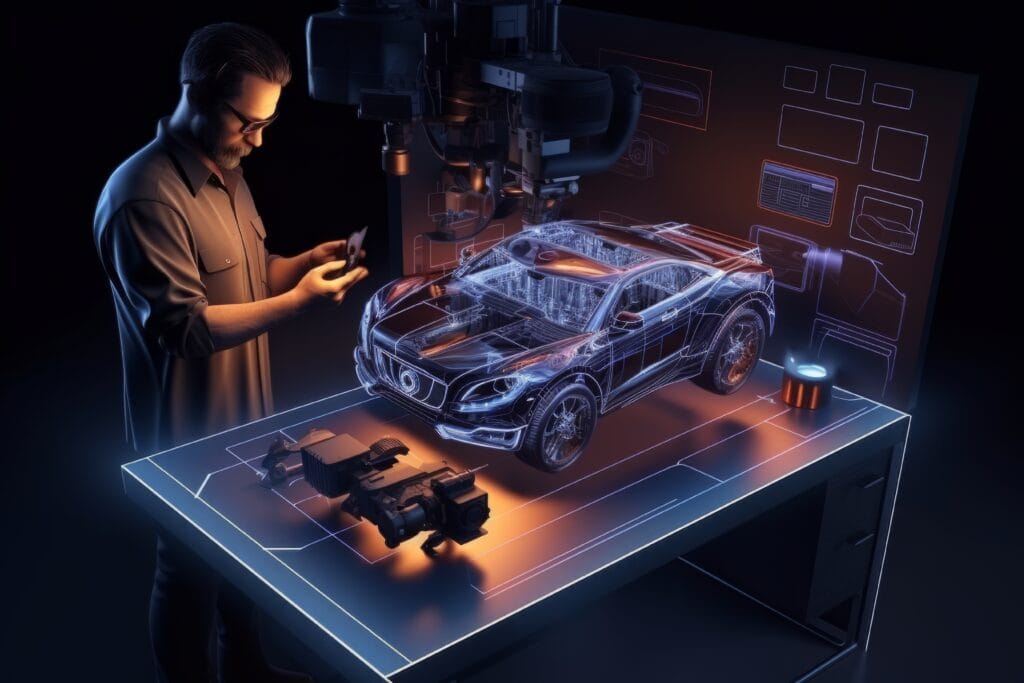
FPGA-based platforms enable rapid prototyping of ECUs, reducing development cycles and costs. Engineers can:
- Emulate hardware behavior
- Validate new features
- Update logic based on test results
This significantly accelerates time-to-market.
Benefits of Using FPGAs in Automotive Electronics
Flexibility and Upgradability
New standards and algorithms can be adopted without redesigning the entire hardware system.
Deterministic and Low-Latency Performance
FPGAs excel in real-time applications such as motor control, sensor fusion, and communication.
Energy Efficiency
Compared to GPUs, FPGAs deliver high performance with lower power consumption, ideal for EV and embedded automotive systems.
Long Lifecycle Support
Automotive products often require support for 10+ years. Reconfigurable hardware ensures longevity.
Security and Safety
Hardware-level isolation, tamper resistance, and deterministic execution help meet ISO 26262 and cybersecurity guidelines.

Challenges and Considerations
Despite the advantages, automotive adoption of reconfigurable computing comes with challenges:
- Need for specialized FPGA design expertise
- Higher initial development effort compared to microcontrollers
- Ensuring compliance with automotive-grade safety and environmental standards
- Balancing cost, performance, and complexity
However, modern FPGA platforms, high-level synthesis (HLS) tools, and IP libraries are helping bridge these gaps.

Future of Reconfigurable Computing in Automotive Systems
As vehicles continue to adopt software-defined architectures, FPGAs will play a bigger role in enabling dynamic and adaptable electronic systems.
The rise of zonal architectures, edge AI, advanced EV systems, and connected mobility strengthens the relevance of reconfigurable computing.
Future advancements will likely include hybrid FPGA-SoC platforms, AI-native FPGA fabrics, and standardized OTA-configurable hardware modules across the automotive ecosystem.
Conclusion
Reconfigurable computing is driving a fundamental transformation across the automotive landscape far beyond autonomous driving.
From powertrain control and V2X communication to cybersecurity, infotainment, and prototyping, FPGAs offer the adaptability, performance, and future-ready architecture needed for next-generation vehicles.
As the industry moves toward software-defined and connected mobility, reconfigurable hardware will continue to be a cornerstone technology shaping safer, smarter, and more efficient automotive systems.