
Explore Shivani’s journey as a female Senior Engineer. Uncover challenges, advice for women in engineering, and insights on her evolving career in this dynamic field.
Women In Engineering with Shivani
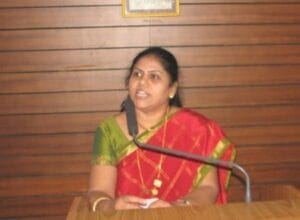
FPGA Insights has conducted an exclusive interview with Shivani, who is working as a Senior Engineer at TVS Motors, to gain valuable insights into her experiences as a woman in engineering.

What’s your Name, job title & area of research/work?
Name: Shivani Nautiyal
Job Title: Senior Engineer
Area of Work: Manufacturing
Job Title: Senior Engineer
Area of Work: Manufacturing
What sparked your interest in engineering? Can you describe the moment you realized this was a field you’d like to pursue?
My interest in engineering was sparked by a deep curiosity about how machines work. As a child, I was always fascinated by moving parts, whether it was watching a bike being repaired or observing the mechanics behind everyday appliances. I loved taking things apart (even if I couldn’t always put them back together perfectly!) just to see what was inside.
The moment I truly realized engineering was for me came during a school field trip to a manufacturing plant. Watching those massive machines in action, with automated arms, conveyor belts, and precision tooling, left a lasting impression on me.
The moment I truly realized engineering was for me came during a school field trip to a manufacturing plant. Watching those massive machines in action, with automated arms, conveyor belts, and precision tooling, left a lasting impression on me.
What are your experiences of being a female engineer?
Being a female engineer has been a mix of challenges and growth. In the beginning, there were moments where I felt the need to prove myself more especially in rooms where I was the only woman. Sometimes, subtle biases or assumptions would surface, but instead of letting that discourage me, I used it as motivation to work harder and let my skills speak for themselves.
Over time, I’ve built confidence, found mentors (both men and women), and connected with an inspiring community of women in tech who uplift and support each other. The industry is evolving, and I’m proud to be part of that change showing that engineering is not defined by gender but by innovation, resilience, and passion.
Over time, I’ve built confidence, found mentors (both men and women), and connected with an inspiring community of women in tech who uplift and support each other. The industry is evolving, and I’m proud to be part of that change showing that engineering is not defined by gender but by innovation, resilience, and passion.
Can you tell me more about your career path so far?
My career path began with a diploma in mechanical engineering, which gave me a solid foundation in core engineering principles like thermodynamics, fluid mechanics, and manufacturing processes. During my diploma, I realized how versatile and impactful mechanical systems are from automotive applications to industrial automation and that really deepened my interest in the field.
After completing my diploma, I pursued opportunities that allowed me to explore hands-on work with machines, tools, and design systems. Over time, I transitioned into roles that required working closely with embedded systems and software, especially in areas where mechanical and electronic systems intersect like in automotive technology.
This mix of mechanical fundamentals and software skills has shaped my journey so far. It’s been an exciting blend of traditional engineering and modern tech.
After completing my diploma, I pursued opportunities that allowed me to explore hands-on work with machines, tools, and design systems. Over time, I transitioned into roles that required working closely with embedded systems and software, especially in areas where mechanical and electronic systems intersect like in automotive technology.
This mix of mechanical fundamentals and software skills has shaped my journey so far. It’s been an exciting blend of traditional engineering and modern tech.
What has been your most challenging experience as an engineer?
One of my most challenging experiences as an engineer was during a project where we had to troubleshoot persistent failures in a mechanical assembly line. The issue wasn’t obvious it involved both mechanical misalignment and subtle errors in timing with the automation system. As someone relatively early in my career at that time, it was overwhelming to step into a complex setup with pressure to deliver quick results.
What made it challenging wasn’t just the technical complexity, but also coordinating with different teams- maintenance, electrical, and quality, to get to the root of the problem. I had to step out of my comfort zone, ask a lot of questions, and stay patient through trial and error.
Eventually, with a lot of teamwork and persistence, we found the solution. That experience taught me how valuable interdisciplinary communication is, and how important it is to stay calm under pressure. It made me a better problem solver and a more confident engineer.
What made it challenging wasn’t just the technical complexity, but also coordinating with different teams- maintenance, electrical, and quality, to get to the root of the problem. I had to step out of my comfort zone, ask a lot of questions, and stay patient through trial and error.
Eventually, with a lot of teamwork and persistence, we found the solution. That experience taught me how valuable interdisciplinary communication is, and how important it is to stay calm under pressure. It made me a better problem solver and a more confident engineer.
What is the most exciting thing about your job?
The most exciting thing about my job is seeing physical results come to life from something you’ve designed or worked on. In engineering, you’re not just dealing with concepts you’re building things that move, operate, and solve real-world problems.
Whether it’s improving a machine’s efficiency or helping design a component that fits perfectly into a larger system, that sense of “I made that work” is incredibly fulfilling.
I also love how every day brings something new, new problems to solve, new systems to understand, and new technologies to learn. The field keeps evolving, and being part of that innovation, especially where mechanical meets automation or embedded systems, makes it both exciting and rewarding.
Whether it’s improving a machine’s efficiency or helping design a component that fits perfectly into a larger system, that sense of “I made that work” is incredibly fulfilling.
I also love how every day brings something new, new problems to solve, new systems to understand, and new technologies to learn. The field keeps evolving, and being part of that innovation, especially where mechanical meets automation or embedded systems, makes it both exciting and rewarding.
What kind of impact would bring you great satisfaction in your work?
The kind of impact that would bring me the greatest satisfaction is creating solutions that make systems safer, more efficient, and more sustainable.
Mechanical engineering plays a key role in industries that touch millions of lives, automotive, manufacturing, energy and knowing that my work contributes to reducing waste, improving performance, or ensuring user safety gives me a strong sense of purpose.
I also find great fulfilment in mentoring or encouraging other young women to enter this field. If my journey can inspire even one girl to believe she belongs in engineering, that impact would be deeply meaningful to me. Empowering others while solving real-world problems that’s the kind of dual impact I strive for in my career.
Mechanical engineering plays a key role in industries that touch millions of lives, automotive, manufacturing, energy and knowing that my work contributes to reducing waste, improving performance, or ensuring user safety gives me a strong sense of purpose.
I also find great fulfilment in mentoring or encouraging other young women to enter this field. If my journey can inspire even one girl to believe she belongs in engineering, that impact would be deeply meaningful to me. Empowering others while solving real-world problems that’s the kind of dual impact I strive for in my career.
What do you think needs to be done to improve the statistics in terms of women’s participation in engineering?
To improve women’s participation in engineering, we need to start with early exposure and encouragement. Many young girls are never introduced to engineering in a way that feels accessible or exciting.
By integrating hands-on STEM activities in schools, showcasing relatable role models, and actively breaking gender stereotypes, we can build their confidence and interest from a young age.
At the academic and professional level, it’s crucial to offer scholarships, mentorship programs, and inclusive policies that support women through their educational and career journeys.
Often, women face subtle biases or lack representation in leadership roles, which can discourage long-term involvement. Creating a culture where diverse perspectives are valued and every individual feels seen and heard is key.
Lastly, we must amplify the success stories of women in core engineering fields, not just in software or IT, but also in mechanical, civil, and electrical domains. When young women see others thriving in these roles, it reinforces the belief that they belong here too.
By integrating hands-on STEM activities in schools, showcasing relatable role models, and actively breaking gender stereotypes, we can build their confidence and interest from a young age.
At the academic and professional level, it’s crucial to offer scholarships, mentorship programs, and inclusive policies that support women through their educational and career journeys.
Often, women face subtle biases or lack representation in leadership roles, which can discourage long-term involvement. Creating a culture where diverse perspectives are valued and every individual feels seen and heard is key.
Lastly, we must amplify the success stories of women in core engineering fields, not just in software or IT, but also in mechanical, civil, and electrical domains. When young women see others thriving in these roles, it reinforces the belief that they belong here too.
What do you enjoy most and least about engineering?
What I enjoy most about engineering is the problem-solving aspect. There’s a unique satisfaction in analyzing a system, identifying the issue, and designing a solution that actually works in the real world.
I also love how engineering constantly evolves, you’re always learning, adapting to new technologies, and pushing your own limits. It’s a field where creativity meets logic, and that balance is very fulfilling.
What I enjoy least, if I’m honest, is when administrative or repetitive tasks take time away from hands-on or technical work. Sometimes, excessive documentation or procedural delays can slow down the actual engineering process.
But I also understand that these aspects are important for safety, consistency, and quality especially in industries like automotive or manufacturing.
Ultimately, the passion for building and improving things far outweighs the few less-exciting parts of the job.
I also love how engineering constantly evolves, you’re always learning, adapting to new technologies, and pushing your own limits. It’s a field where creativity meets logic, and that balance is very fulfilling.
What I enjoy least, if I’m honest, is when administrative or repetitive tasks take time away from hands-on or technical work. Sometimes, excessive documentation or procedural delays can slow down the actual engineering process.
But I also understand that these aspects are important for safety, consistency, and quality especially in industries like automotive or manufacturing.
Ultimately, the passion for building and improving things far outweighs the few less-exciting parts of the job.
Who has been your greatest support, coach, and mentor across [Industry], and why?
My greatest support and mentor in the engineering industry has been one of my college professors. He didn’t just teach theory, he encouraged me to ask questions, think practically, and step outside the textbook.
When I doubted myself or felt unsure about taking on technical challenges in a male-dominated field, he reminded me of my capabilities and potential.
Later in my career, I also had the opportunity to work under a senior engineer in the industry who believed in guiding, not just supervising. He took the time to explain complex systems, involved me in critical projects, and treated me as an equal. That mentorship played a big role in shaping my confidence and professional growth.
Having people who not only teach but genuinely support your journey makes all the difference especially as a woman in a core engineering field.
When I doubted myself or felt unsure about taking on technical challenges in a male-dominated field, he reminded me of my capabilities and potential.
Later in my career, I also had the opportunity to work under a senior engineer in the industry who believed in guiding, not just supervising. He took the time to explain complex systems, involved me in critical projects, and treated me as an equal. That mentorship played a big role in shaping my confidence and professional growth.
Having people who not only teach but genuinely support your journey makes all the difference especially as a woman in a core engineering field.
What is it like to be a woman in engineering? Do you feel that your gender gives you a different perspective and experience from your male counterparts? Any advantages?
Being a woman in engineering is both empowering and challenging. It’s rewarding to break stereotypes and earn respect based on skills. I do believe my gender brings a different perspective, especially in problem-solving, communication, and team dynamics.
While I’ve faced biases, it has also made me more resilient and focused. Women bring strong collaboration, attention to detail, and empathy to engineering qualities that truly strengthen any team.
While I’ve faced biases, it has also made me more resilient and focused. Women bring strong collaboration, attention to detail, and empathy to engineering qualities that truly strengthen any team.
What advice do you have for women interested in engineering? What kinds of practical experience should they have? What technical skills should they pick up?
My advice to women interested in engineering is simple: don’t doubt yourself. If you’re curious, love solving problems, and enjoy building or designing things, this field is absolutely for you. You belong here.
Start by gaining hands-on experience through internships, workshops, or personal projects. Working with real tools, machines, or software will build your confidence and help you understand how theory applies in the real world.
In terms of technical skills, focus on the basics of design (like CAD), manufacturing processes, and troubleshooting techniques. For those moving toward automation or embedded systems, knowledge of programming (like C/C++) and electronics is a big plus.
Also, don’t hesitate to ask questions, network with professionals, and find a mentor. Support and continuous learning go a long way in building a strong career.
Start by gaining hands-on experience through internships, workshops, or personal projects. Working with real tools, machines, or software will build your confidence and help you understand how theory applies in the real world.
In terms of technical skills, focus on the basics of design (like CAD), manufacturing processes, and troubleshooting techniques. For those moving toward automation or embedded systems, knowledge of programming (like C/C++) and electronics is a big plus.
Also, don’t hesitate to ask questions, network with professionals, and find a mentor. Support and continuous learning go a long way in building a strong career.