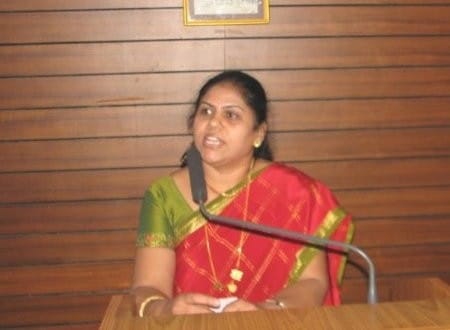
Explore Dr. Veena’s journey as a female Director, Research and Engineering. Uncover challenges, advice for women in engineering, and insights on her evolving career in this dynamic field.
Women In Engineering
FPGA Insights has conducted an exclusive interview with Dr. Veena S Chakravarthi, who is Director of Research and Engineering at LeadSOC Technologies, to gain valuable insights into her experiences as a woman in engineering.
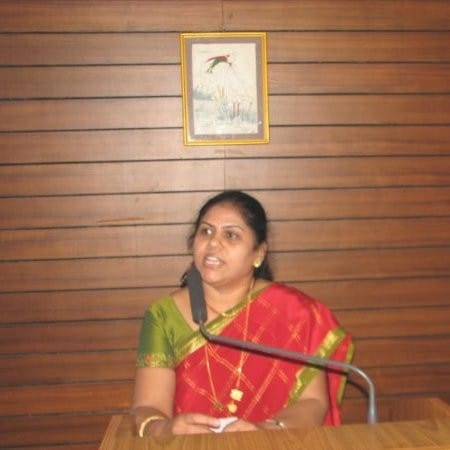
What’s your Name, job title & area of research/work?
Dr. Veena S Chakravarthi, Director, Research and Engineering, LeadSOC Technologies, Bangalore/ Heading offshore development center for an AI company.
What sparked your interest in engineering? Can you describe the moment you realized this was a field you’d like to pursue?
You’re taking me back to 1982- a very different world with no internet, no instant connectivity, and a childhood shaped in Hubli, which at the time was just a small taluk headquarters, far from the metros of today. Coming from a family of journalists and teachers, engineering was neither a familiar nor an obvious path. In fact, I was the first engineer in my family.
Looking back, it almost feels like my parents put me into engineering as an experiment. What I mean is- it wasn’t an informed or carefully planned decision based on a deep understanding of the field. It was far simpler: my academic score opened the door to engineering, and I just walked through it. At the time, it felt like just another degree to pursue, not something I would ever speak about, teach, or feel passionate about the way my parents did with their own professions.
But once I entered the program, the structured way of thinking, the problem-solving mindset, and the thrill of understanding how systems work slowly pulled me in. Somewhere in those early semesters, I realized that engineering wasn’t just a course I had qualified for- it was something that genuinely resonated with me. There was no dramatic “aha” moment; instead, it was a steady, gradual discovery that ultimately shaped my long-term journey in engineering.
Looking back, it almost feels like my parents put me into engineering as an experiment. What I mean is- it wasn’t an informed or carefully planned decision based on a deep understanding of the field. It was far simpler: my academic score opened the door to engineering, and I just walked through it. At the time, it felt like just another degree to pursue, not something I would ever speak about, teach, or feel passionate about the way my parents did with their own professions.
But once I entered the program, the structured way of thinking, the problem-solving mindset, and the thrill of understanding how systems work slowly pulled me in. Somewhere in those early semesters, I realized that engineering wasn’t just a course I had qualified for- it was something that genuinely resonated with me. There was no dramatic “aha” moment; instead, it was a steady, gradual discovery that ultimately shaped my long-term journey in engineering.
What are your experiences of being a female engineer?
My experiences as a female engineer have been shaped largely by my openness to experimentation, curiosity, and a willingness to test out whatever guidance the many “free advisors” in my family and friend circle offered. For example, someone once (in the late 1980s) told me that Bangalore had far more opportunities for engineers because of its factories and public-sector units, so I moved to Bangalore. Another person advised that academics was a good path for lady engineers, and I joined IISc as a research assistant. Then a third person told me that a factory job would bring stability and security, so I joined ITI Limited. There was an opportunity to do a master’s/PhD while working in ITI. I did my master’s and PhD while working. My husband told me that pursuing any course at IIM Bangalore is good, and I did a management course at IIM Bangalore. And it just goes on like that.
When I look back now, what stands out is not the advice itself, but my experimental nature and my habit of taking every opportunity that came my way. That willingness to explore different environments is what got noticed and ultimately shaped my career.
Across all the places I’ve worked, from my earliest roles to the most recent, I never personally encountered gender-based discrepancies in the work itself. However, with more experience and awareness today, I clearly see the statistics: there are very few women in leadership positions. Because of that, I now consciously try to support and promote well-deserving women engineers whenever I can.
When I look back now, what stands out is not the advice itself, but my experimental nature and my habit of taking every opportunity that came my way. That willingness to explore different environments is what got noticed and ultimately shaped my career.
Across all the places I’ve worked, from my earliest roles to the most recent, I never personally encountered gender-based discrepancies in the work itself. However, with more experience and awareness today, I clearly see the statistics: there are very few women in leadership positions. Because of that, I now consciously try to support and promote well-deserving women engineers whenever I can.
Can you tell me more about your career path so far?
My career path so far has been a rich learning journey across a wide variety of organizations and roles. I began at the Microelectronics department at ITI Limited, a public-sector company, which gave me my first exposure to disciplined engineering environments. From there, I moved to Mindtree, entering the world of private consulting services in the technology team to develop silicon IP cores. I later shifted into product companies like Centillium and Transwitch, where I worked on chip design and deepened my understanding of semiconductor technologies.
At one stage, I transitioned into academics at BNM Institute, which opened up an entirely new dimension of teaching, mentoring, and research. After that, I continued to diversify my experience through roles at Asarva Technologies, Ikanos Communications, Marvell, Sankhya Labs, and Prodigytech, working in consulting and architecture-focused positions.
Eventually, this blend of academic and industry experience inspired me to co-found Sensesemi Technologies. Over time, moving fluidly between these worlds helped me clearly see the gaps between theory and practice, and more importantly, it motivated me to contribute to bridging those gaps. That is what sparked my passion for writing and publishing books on advanced VLSI grounded in real-world experience, as well as guiding research candidates and mentoring students and colleagues through their study and career paths. This helped me design and develop training courses at Synopsys, and now on a mission to translate all my technical and managerial experiences into anything that adds value.
The journey is still continuing, and each phase has added a layer of learning, purpose, and contribution.
At one stage, I transitioned into academics at BNM Institute, which opened up an entirely new dimension of teaching, mentoring, and research. After that, I continued to diversify my experience through roles at Asarva Technologies, Ikanos Communications, Marvell, Sankhya Labs, and Prodigytech, working in consulting and architecture-focused positions.
Eventually, this blend of academic and industry experience inspired me to co-found Sensesemi Technologies. Over time, moving fluidly between these worlds helped me clearly see the gaps between theory and practice, and more importantly, it motivated me to contribute to bridging those gaps. That is what sparked my passion for writing and publishing books on advanced VLSI grounded in real-world experience, as well as guiding research candidates and mentoring students and colleagues through their study and career paths. This helped me design and develop training courses at Synopsys, and now on a mission to translate all my technical and managerial experiences into anything that adds value.
The journey is still continuing, and each phase has added a layer of learning, purpose, and contribution.
What has been your most challenging experience as an engineer?
The most challenging experiences in my career aren’t defined by a single moment or project, because I’ve always believed in giving my best to every challenge that comes my way. For me, every problem, whether small or big, arrives as an unseen problem. And regardless of success or failure, the hard work put in is always visible to me and to those around me. That commitment is what has kept me going, even today.
In my early career, something as simple as designing a test fixture/probe card during VLSI chip testing felt like a significant challenge and learning opportunity. Later, taping out complex system-on-chip designs at advanced technology nodes pushed me to an entirely different level of problem-solving and rigor. More recently, contributing to the development of a healthcare ecosystem brought its own set of multidisciplinary challenges.
Each of these experiences- technical, organizational, or transformational- has been demanding in its own way. But they have all been worth going through, because they shaped my growth as an engineer and strengthened my confidence to embrace the next challenge with the same dedication.
In my early career, something as simple as designing a test fixture/probe card during VLSI chip testing felt like a significant challenge and learning opportunity. Later, taping out complex system-on-chip designs at advanced technology nodes pushed me to an entirely different level of problem-solving and rigor. More recently, contributing to the development of a healthcare ecosystem brought its own set of multidisciplinary challenges.
Each of these experiences- technical, organizational, or transformational- has been demanding in its own way. But they have all been worth going through, because they shaped my growth as an engineer and strengthened my confidence to embrace the next challenge with the same dedication.
What is the most exciting thing about your job?
The most exciting thing about my job is the fundamental belief that any problem, small or big, is solvable. The outcome may not always be a commercial or business success, and it may even be considered a failure by those standards.
But the moment of actually solving the problem, of seeing something complex finally fall into place, has always been the most energizing part of my work. That moment of clarity and accomplishment is what keeps me motivated, project after project.
But the moment of actually solving the problem, of seeing something complex finally fall into place, has always been the most energizing part of my work. That moment of clarity and accomplishment is what keeps me motivated, project after project.
What kind of impact would bring you great satisfaction in your work?
The kind of impact that brings me the greatest satisfaction is when my work meaningfully helps solve real problems and creates opportunities for others.
Throughout my career, whether I was designing a simple probe card, taping out a complex SoC, or building a healthcare ecosystem, the true joy has always come from knowing that the effort, successful or not in commercial terms, moves something forward.
Today, what matters most to me is contributing in ways that bridge gaps: between theory and practice, between academic learning and industry needs, and between talent and opportunity. When a student I mentored finds clarity in their path, when a young engineer gains confidence, or when a technical solution we build makes someone’s life better, that is the impact that deeply satisfies me.
If my work can continue enabling problem-solving, opening doors, and empowering the next generation of engineers, I would consider that the most meaningful and fulfilling impact I can make.
Throughout my career, whether I was designing a simple probe card, taping out a complex SoC, or building a healthcare ecosystem, the true joy has always come from knowing that the effort, successful or not in commercial terms, moves something forward.
Today, what matters most to me is contributing in ways that bridge gaps: between theory and practice, between academic learning and industry needs, and between talent and opportunity. When a student I mentored finds clarity in their path, when a young engineer gains confidence, or when a technical solution we build makes someone’s life better, that is the impact that deeply satisfies me.
If my work can continue enabling problem-solving, opening doors, and empowering the next generation of engineers, I would consider that the most meaningful and fulfilling impact I can make.
What do you think needs to be done to improve the statistics in terms of women’s participation in engineering?
To improve women’s participation in engineering, I believe we must start by ensuring equal opportunity with conscious intent. This does not mean giving anyone an unfair advantage- it means recognizing that when a man and a woman have the same skill set, capability, and suitability for a role, choosing the woman is not bias; it is correcting a natural, structural disadvantage she has already endured.
It is worth acknowledging that while menstruation may cause days of lost time and reduced productivity each year, the real impact comes from the months or even years lost due to childbirth and the caregiving responsibilities that follow. These are not small interruptions- they accumulate into long-term disadvantages in career progression, confidence, earnings, leadership visibility, and even retirement savings. Men simply do not face this magnitude of biologically and socially driven career slowdowns.
Therefore, improving the statistics is not just about encouraging more girls into STEM; it requires a deliberate, systemic commitment in workplaces:
When two equally qualified candidates stand before us, consciously preferring the woman candidate helps level the playing field.
Ensuring women are not silently penalized for natural life events like childbirth. Providing flexibility, structured return-to-work programs, and leadership pathways that account for real life, not an idealized linear career.
Women don’t need sympathy; they need fairness, intentional opportunity, and recognition of the realities they navigate. If we adopt this mindset consistently, we will see not just improved statistics, but richer, more diverse engineering teams and stronger outcomes for the industry as a whole.
It is worth acknowledging that while menstruation may cause days of lost time and reduced productivity each year, the real impact comes from the months or even years lost due to childbirth and the caregiving responsibilities that follow. These are not small interruptions- they accumulate into long-term disadvantages in career progression, confidence, earnings, leadership visibility, and even retirement savings. Men simply do not face this magnitude of biologically and socially driven career slowdowns.
Therefore, improving the statistics is not just about encouraging more girls into STEM; it requires a deliberate, systemic commitment in workplaces:
When two equally qualified candidates stand before us, consciously preferring the woman candidate helps level the playing field.
Ensuring women are not silently penalized for natural life events like childbirth. Providing flexibility, structured return-to-work programs, and leadership pathways that account for real life, not an idealized linear career.
Women don’t need sympathy; they need fairness, intentional opportunity, and recognition of the realities they navigate. If we adopt this mindset consistently, we will see not just improved statistics, but richer, more diverse engineering teams and stronger outcomes for the industry as a whole.
What do you enjoy most and least about engineering?
What I enjoy most about engineering is the sheer joy of problem-solving. The ability to take an unknown, break it down, understand it, and eventually solve it is incredibly satisfying. That moment when a solution finally works, regardless of the complexity, is what keeps me passionate about this field.
What I enjoy the least is the reality that a technically sound solution and commercial success are often two very different things. A product may work beautifully from an engineering standpoint, yet still fail in the market for reasons beyond technology. It is always challenging to recover from the disappointment of a commercial failure despite having solved the problem brilliantly.
Shifting your mindset, detaching from that outcome, and gearing up to take on the next challenge requires a huge emotional and mental effort. But over time, I’ve learned to accept this as part of the journey and keep moving forward.
What I enjoy the least is the reality that a technically sound solution and commercial success are often two very different things. A product may work beautifully from an engineering standpoint, yet still fail in the market for reasons beyond technology. It is always challenging to recover from the disappointment of a commercial failure despite having solved the problem brilliantly.
Shifting your mindset, detaching from that outcome, and gearing up to take on the next challenge requires a huge emotional and mental effort. But over time, I’ve learned to accept this as part of the journey and keep moving forward.
Who has been your greatest support, coach, and mentor across Engineering industry, and why?
My greatest support, guidance, and mentorship have come from many different circles. Above all, my own network of friends and the many success stories I’ve witnessed around me have been my strongest mentors. Their journeys, resilience, and perspectives have shaped my thinking far more deeply than any formal coaching ever could.
Beyond that, I deeply admire and learn from visionaries such as Charlie Munger, Bill Gates, and Elon Musk. In my own professional network, leaders like Faraj Aalaei, Naveed Sherwani, and Lip-Bu Tan have been influential figures whose work and leadership I closely follow.
For broader life lessons and personal grounding, I draw inspiration from Naval Ravikant, B. K. Shivani, and even my own peers who offer continuous support and honesty. Each of these individuals, through their actions, philosophies, or lived examples, has guided me at different stages and contexts in my journey. The unwavering support of the family (Husband and children) of course is a big support for any woman, particularly in engineering, when work days are very demanding, which is most of the days in a career. Together, they form a powerful support system that keeps me learning, evolving, and staying true to my path.
Beyond that, I deeply admire and learn from visionaries such as Charlie Munger, Bill Gates, and Elon Musk. In my own professional network, leaders like Faraj Aalaei, Naveed Sherwani, and Lip-Bu Tan have been influential figures whose work and leadership I closely follow.
For broader life lessons and personal grounding, I draw inspiration from Naval Ravikant, B. K. Shivani, and even my own peers who offer continuous support and honesty. Each of these individuals, through their actions, philosophies, or lived examples, has guided me at different stages and contexts in my journey. The unwavering support of the family (Husband and children) of course is a big support for any woman, particularly in engineering, when work days are very demanding, which is most of the days in a career. Together, they form a powerful support system that keeps me learning, evolving, and staying true to my path.
What is it like to be a woman in engineering? Do you feel that your gender gives you a different perspective and experience from your male counterparts? Any advantages?
Being a woman in engineering is a mixed baggage of both advantages and disadvantages. In many ways, our approach to problem-solving and project execution is naturally different from that of our male counterparts. Women often bring a higher degree of sensitivity, sharpness, and holistic thinking to a challenge, qualities that can be incredibly valuable in complex engineering environments.
At the same time, there are internal barriers that many women, including myself, have experienced. We tend to underestimate our own potential, withdraw too quickly, or avoid major conflicts in an effort to maintain alignment or harmony. In competitive situations, this tendency to step back rather than step forward can limit opportunities unless there is conscious support or encouragement.
So yes, being a woman in engineering does give a different perspective and experience. The advantage lies in our ability to see problems from multiple angles and manage teams with emotional intelligence and balance. The disadvantage often comes from within our reluctance to push ourselves into uncomfortable or competitive spaces. With the right support, awareness, and opportunities, that gap can be closed, and the strengths women bring to engineering can shine even more.
At the same time, there are internal barriers that many women, including myself, have experienced. We tend to underestimate our own potential, withdraw too quickly, or avoid major conflicts in an effort to maintain alignment or harmony. In competitive situations, this tendency to step back rather than step forward can limit opportunities unless there is conscious support or encouragement.
So yes, being a woman in engineering does give a different perspective and experience. The advantage lies in our ability to see problems from multiple angles and manage teams with emotional intelligence and balance. The disadvantage often comes from within our reluctance to push ourselves into uncomfortable or competitive spaces. With the right support, awareness, and opportunities, that gap can be closed, and the strengths women bring to engineering can shine even more.
What advice do you have for women interested in engineering? What kinds of practical experience should they have? What technical skills should they pick up?
My advice to women interested in engineering is rooted in both experience and observation.
1. Take up every opportunity, even if it feels unreasonable at first. Many of the best lessons and breakthroughs in my career came from saying “yes” before I felt fully ready. Opportunities rarely arrive neatly packaged; they often look inconvenient, uncertain, or intimidating. Take them anyway.
2. Be fearless, but stay honest- both to yourself and to the profession. Fearlessness does not mean recklessness; it means trusting your ability to learn, grow, and adapt. Engineering demands integrity. If you stay true to your work, your values, and your effort, everything else will fall into place.
3. Keep unlearning and relearning as needed. Technology evolves rapidly. What you mastered five years ago may be outdated today. The ability to pivot, refresh your knowledge, and stay curious is more important than any single skill set.
4. Manage your health intentionally. Women often play multiple roles with equal rigor both at home and at work. Your physical, emotional, and mental well-being cannot be an afterthought. Sustained success in engineering demands sustained self-care.
In terms of practical experience, hands-on exposure is invaluable:
1. Work on real projects, internships, maker labs, hackathons, or small prototypes.
2. Get comfortable with debugging, testing, and dealing with imperfect systems.
3. Observe how engineering decisions get made in real environments. This teaches more than textbooks ever can.
For technical skills, a solid foundation goes a long way:
1. Strong fundamentals in math, physics, and core engineering concepts.
2. Proficiency with tools relevant to your domain- coding, simulation, design, or testing tools.
3. The ability to break down a problem logically and think through constraints.
4. Clear communication and documentation skills are underrated but essential in engineering teams.
Ultimately, engineering is a fantastic career for women. With courage, curiosity, and continuous learning, you can build a path that is both meaningful and impactful.
1. Take up every opportunity, even if it feels unreasonable at first. Many of the best lessons and breakthroughs in my career came from saying “yes” before I felt fully ready. Opportunities rarely arrive neatly packaged; they often look inconvenient, uncertain, or intimidating. Take them anyway.
2. Be fearless, but stay honest- both to yourself and to the profession. Fearlessness does not mean recklessness; it means trusting your ability to learn, grow, and adapt. Engineering demands integrity. If you stay true to your work, your values, and your effort, everything else will fall into place.
3. Keep unlearning and relearning as needed. Technology evolves rapidly. What you mastered five years ago may be outdated today. The ability to pivot, refresh your knowledge, and stay curious is more important than any single skill set.
4. Manage your health intentionally. Women often play multiple roles with equal rigor both at home and at work. Your physical, emotional, and mental well-being cannot be an afterthought. Sustained success in engineering demands sustained self-care.
In terms of practical experience, hands-on exposure is invaluable:
1. Work on real projects, internships, maker labs, hackathons, or small prototypes.
2. Get comfortable with debugging, testing, and dealing with imperfect systems.
3. Observe how engineering decisions get made in real environments. This teaches more than textbooks ever can.
For technical skills, a solid foundation goes a long way:
1. Strong fundamentals in math, physics, and core engineering concepts.
2. Proficiency with tools relevant to your domain- coding, simulation, design, or testing tools.
3. The ability to break down a problem logically and think through constraints.
4. Clear communication and documentation skills are underrated but essential in engineering teams.
Ultimately, engineering is a fantastic career for women. With courage, curiosity, and continuous learning, you can build a path that is both meaningful and impactful.