Explore Swathi’s journey as a female Automation Tester. Uncover challenges, advice for women in engineering, and insights on her evolving career in this dynamic field.
Women In Engineering
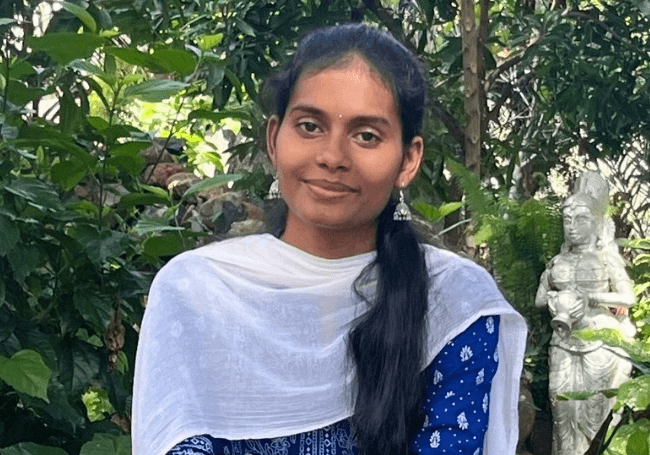
FPGA Insights has conducted an exclusive interview with Swathi, who is working as an Automation Tester at Cognizant, to gain valuable insights into her experiences as a woman in engineering.

What’s your Name, job title & area of research/work?
My name is Swathi, and I work as an Automation Tester at Cognizant.
My role focuses on ensuring software quality through automation, which enables faster and more efficient delivery of reliable applications.
What sparked your interest in engineering? Can you describe the moment you realized this was a field you’d like to pursue?
To be honest, when I first chose engineering, it wasn’t out of a clear passion. My parents encouraged me to take this path, and like many students, I just followed their advice.
In the beginning, especially with coding, I found it very difficult and often doubted if I’d made the right choice.
But things changed when I got my first job at TCS. That’s when I saw how engineering could actually make a real difference in how the systems we build impact businesses and people’s lives.
That experience made me realize the true value of being an engineer, and it motivated me to grow in this field.
What are your experiences of being a female engineer?
My journey as a female engineer has been a mix of challenges and learning. I had to push myself harder to be heard and prove my skills.
But over time, I realized that the tech world values results. Once I started delivering and building confidence in my work, respect naturally followed.
So yes, there are moments where it feels challenging, but at the same time, it has made me stronger, more resilient, and proud to be part of the change, showing that women can thrive and lead in engineering roles.
Can you tell me more about your career path so far?
I actually started my career as a developer, but within the first couple of weeks, I realized it wasn’t the right fit for me. That’s when I switched to testing. I began with manual testing, which gave me a solid foundation and then gradually upskilled into automation testing.
As I grew, I started developing my own frameworks for real-time web applications like Naukri and Instamart, which gave me deeper insights into how automation can add real value.
Along the way, I also started sharing my learnings and projects regularly on LinkedIn, which helped me connect with a wider tech community.
Today, besides my full-time role, I also mentor fellow SDETs, helping them with career growth, interview prep, publishing ebooks about testing, and building confidence in this field through platforms like Topmate. That part of my journey assisting others is something I truly enjoy.
What has been your most challenging experience as an engineer?
One of my biggest challenges was transitioning from manual to automation testing.
It required me to quickly pick up new technical skills while meeting project deadlines.
At first, it felt overwhelming, but I kept pushing through and now I see it as one of the best turning points in my career.
What is the most exciting thing about your job?
The most exciting part of my job is that it keeps me curious and engaged every single day.
I’m the kind of person who gets genuinely excited when I see the output of my work. I enjoy stepping into the shoes of an end user, exploring the application, and finding bugs; it’s like solving little puzzles.
Honestly, sometimes developers aren’t too thrilled when I spot issues, but that’s exactly what makes the product stronger. That thrill of improving something before it reaches the end user is what makes testing so exciting for me.
What kind of impact would bring you great satisfaction in your work?
For me, the biggest satisfaction comes from giving back to the community.
It took me nearly six years to reach where I am today and along the way I noticed that many people struggle, not because they lack talent, but because they don’t know the right roadmap.
That’s why I actively guide fellow SDETs with the knowledge and experience I’ve gained. Whether it’s sharing resources, offering career guidance, or helping with interview prep, seeing others grow and succeed because of something I contributed gives me more satisfaction than anything else.
What do you think needs to be done to improve the statistics in terms of women’s participation in engineering?
I think things are already changing, more and more women are stepping into engineering today. To bring in even more, what’s really needed is awareness.
Many young women don’t always have a clear picture of what engineering actually is and the kind of impact they can create in this field.
If we can show them real examples, share success stories, and give them the right guidance early on, it will inspire them to pursue engineering with confidence.
What do you enjoy most and least about engineering?
What I enjoy most is problem-solving; every challenge is a new puzzle to crack.
What I enjoy the least are the long debugging hours, but honestly, the satisfaction of finally fixing the issue always outweighs the frustration.
Who has been your greatest support, coach, and mentor across [Industry], and why?
I would say my biggest mentor has been Pavan Kumar Bhimavarapu. I actually learned automation primarily by watching his videos and I can confidently say that without his content, I wouldn’t be the automation tester I am today. All credit goes to him for building such practical learning resources.
Apart from that, my colleagues and managers have also played a vital role in my journey. Their constant support, encouragement and guidance have helped me grow both technically and personally.
What is it like to be a woman in engineering? Do you feel that your gender gives you a different perspective and experience from your male counterparts? Any advantages?
Honestly, I feel it’s not so much about gender anymore.
In today’s corporate world, there are excellent benefits and opportunities for women, and what really matters is the value you bring. If you put forward a strong idea, people will consider it no matter who you are.
Of course, diversity does bring different perspectives, and that’s always an advantage for teams. But at the end of the day, engineering is about problem-solving, collaboration and impact, and in those areas, talent speaks louder than gender.
What advice do you have for women interested in engineering? What kinds of practical experience should they have? What technical skills should they pick up?
There are countless opportunities in engineering, but the first step is to find what you are genuinely interested in.
Don’t base your career decisions only on what others say. This is your journey, and you should decide the direction.
In terms of skills, there isn’t a single fixed path. Engineering has multiple roles, such as development, testing, data, DevOps, AI, and more. The key is to explore, understand which role suits your strengths and interests, and then focus on building the right skills for that area.
Practical experience matters , work on small projects, contribute to open source, or even create your own mini apps or automation frameworks. These hands-on experiences will give you confidence and help you stand out.